



Trk Receptor
Tropomyosin related kinase receptor
Trk receptors are a family of three receptor tyrosine kinases (TrkA, TrkB, and TrkC), each of which can be activated by one or more of four neurotrophins-nerve growth factor (NGF), brain-derived neurotrophic factor (BDNF), and neurotrophins 3 and 4 (NT3 and NT4).
TrkA, TrkB, and TrkC are transmembrane proteins that comprise the TRK receptor family. These receptor tyrosine kinases are expressed in human neuronal tissue, and play an essential role in both the physiology of development and function of the nervous system through activation by neurotrophins (NTs). The latter are specific ligands known as NGF for TrkA, BDGF, and NT-4/5 for TrkB and NT3 for TrkC, respectively.
The binding of the ligand to the receptor triggers the oligomerisation of the receptors and phosphorylation of specific tyrosine residues in the intracytoplasmic kinase domain. This event results into the activation of signal transduction pathways leading to proliferation, differentiation and survival in normal and neoplastic neuronal cells.
Trk Receptor Isoform Specific Products
All Product Categories
-
Trk Receptor Inhibitors
(148)
View all products
-
Trk Receptor Agonists
(13)
View all products
-
Trk Receptor Antagonists
(4)
View all products
-
Trk Receptor Activators
(24)
View all products
-
Trk Receptor Modulators
(4)
View all products
-
Trk Receptor Degraders
(5)
View all products
-
Trk Receptor Controls
(4)
View all products
-
Trk Receptor Ligands
(2)
View all products
-
Trk Receptor Related Products (220)
Related Products (220)

-
Antibodies (9)
-
Trk Receptor Isoform Comparison
-
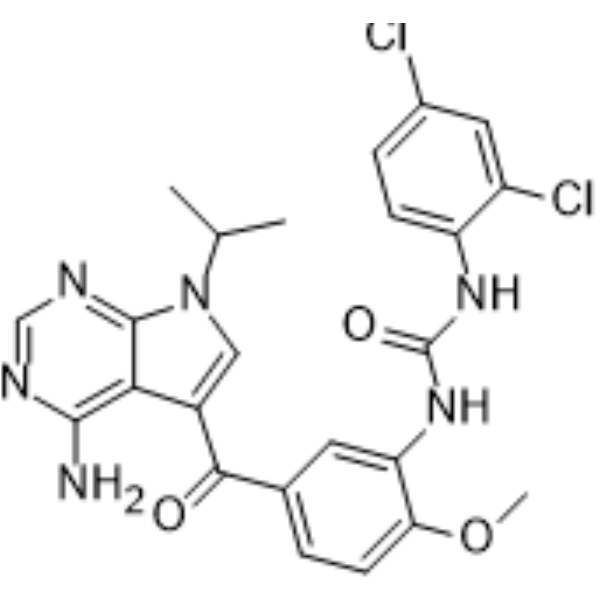
ALK-IN-28
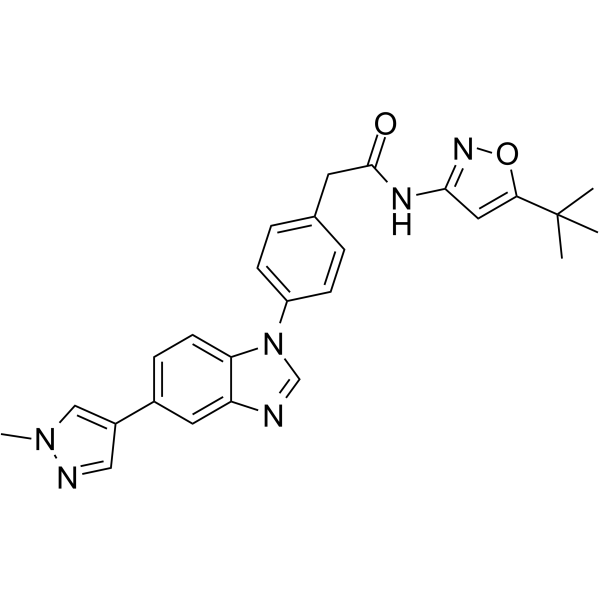
 0 ImagesALK-IN-28 (compound 22) is an inhibitor of anaplastic lymphoma kinase (ALK).
-
ALE-0540
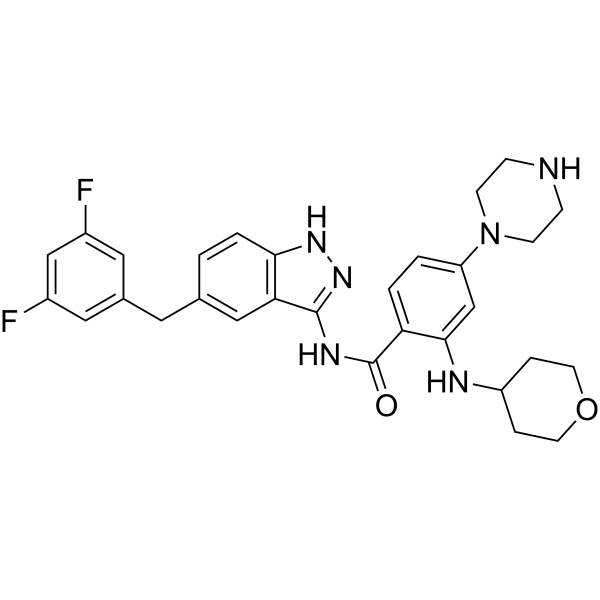
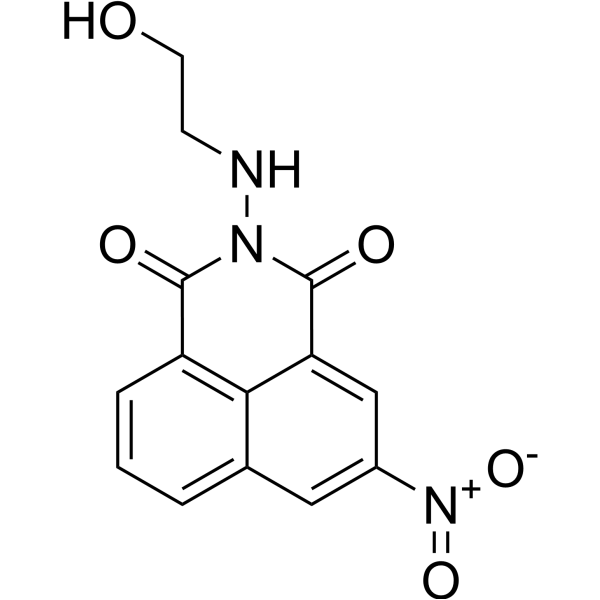 0 ImagesALE-0540, a nonpeptidic small molecule, is a nerve growth factor receptor antagonist. ALE-0540 inhibits the binding of NGF to tyrosine kinase (Trk) A or both p75 and TrkA with IC50 values of 5.88 μM and 3.72 μM, respectively. ALE-0540 can be used to examine mechanisms leading to the development of agents for the study of pain.
-
Hericene A
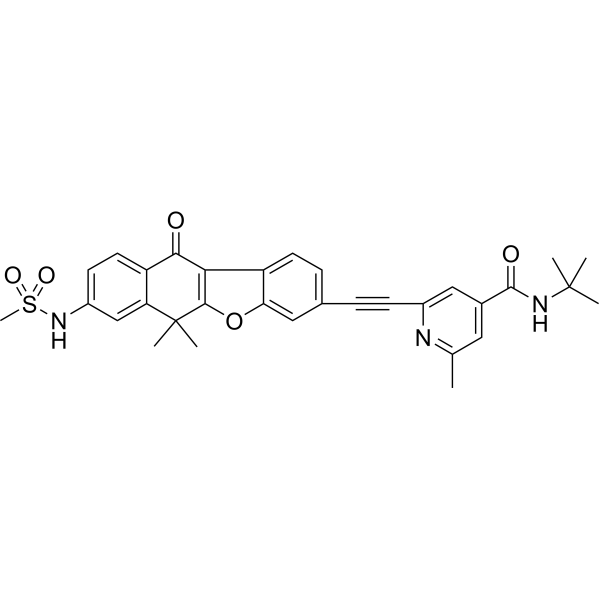
 0 ImagesHericene A is an orally active aromatic hericene derivative. Hericene A exhibits anti-inflammatory and neurotrophic activities, and can found in the fruiting bodies of Hericium erinaceus. Hericene A inhibits the secretion of pro-inflammatory mediators. Hericene A promotes axonal growth, neurite branching, neurotrophic factor expression and downstream signal transduction. Hericene A can be used for the research of inflammatory and neurological diseases.
-
Ganglioside GM1-binding peptide p3
 0 ImagesGanglioside GM1-binding peptide p3 is a synthetic peptide that can specifically bind to the pentasaccharide part of GM1 ganglioside. The dynamic transformation of Ganglioside GM1-binding peptide p3 may play an important role in the function of GM1 as a multiple receptor, such as in the classical pathway of cholera toxin infection. Ganglioside GM1-binding peptide p3 can be used to study the interaction between GM1 and its ligands.
-
(E)-3',6-Disinapoylsucrose
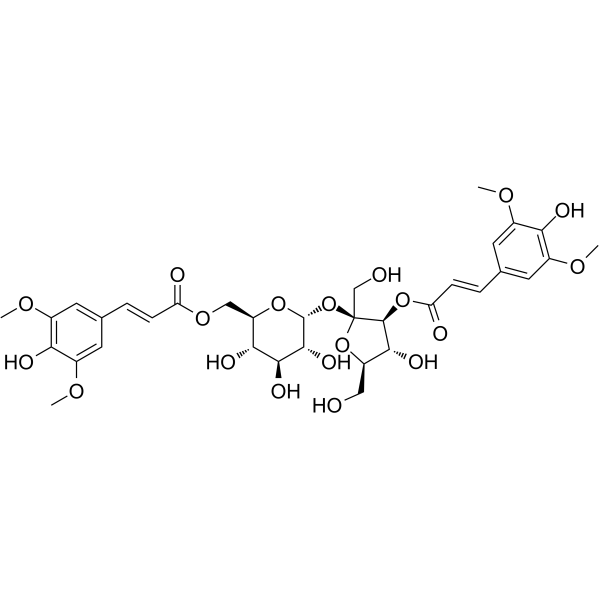 0 Images(E)-3',6-Disinapoylsucrose is an orally active, blood-brain barrier permeable neuroprotective agent that inhibits Aβ protein aggregation. (E)-3',6-Disinapoylsucrose exerts anxiolytic, anti-inflammatory and cognitive-enhancing effects. (E)-3',6-Disinapoylsucrose regulates the TrkB/BDNF signaling pathway, inhibits the expression of NF-κB p65, reduces pro-inflammatory cytokine levels, and alleviates neuronal damage. (E)-3',6-Disinapoylsucrose also enhances the functions of central 5-HT and noradrenergic systems, thereby improving spatial learning and memory abilities and reducing anxiety-like behaviors. (E)-3',6-Disinapoylsucrose can be used for the research of related diseases such as Alzheimer's disease, depression, memory impairment and anxiety disorder.
-
TrkA-IN-1
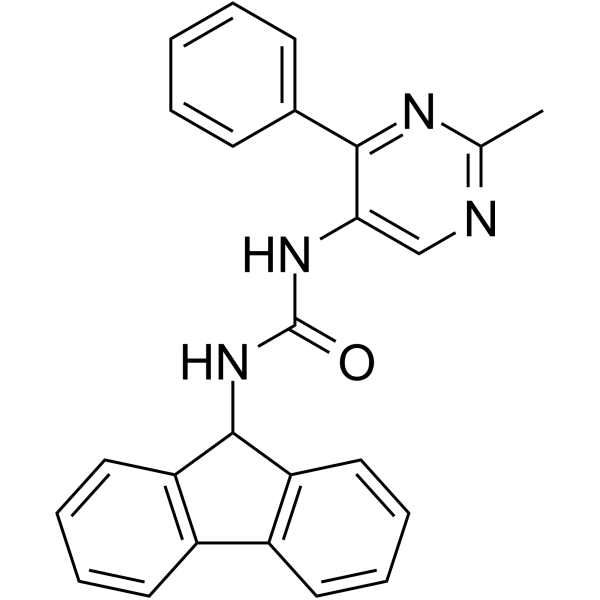 0 ImagesCat. No.: HY-129634CAS No.: 1680179-43-4TrkA-IN-1 is a potent and selective Tropomyosin-related kinase A (TrkA) inhibitor with an IC50 of 99 nM in a cell-based assay. TrkA-IN-1 has analgesic activity.
-
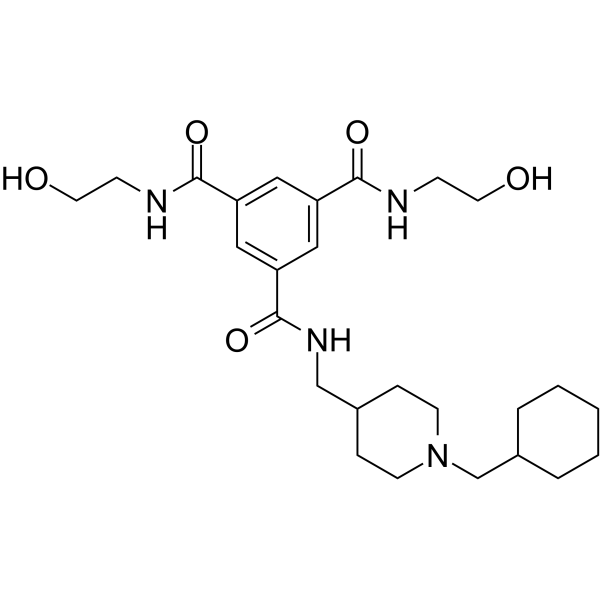
XMD-17-51 TFA
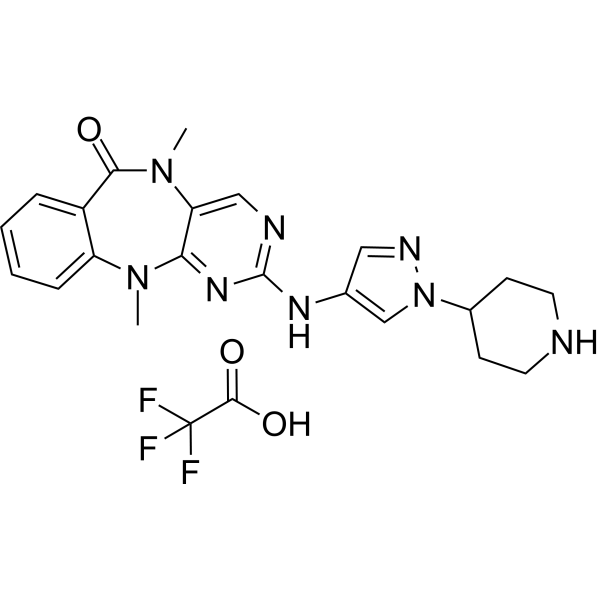 0 ImagesXMD-17-51 TFA is a pyrimido-diazepinone compound that is able to modulate protein kinases.
-
ZEB85
 0 ImagesCat. No.: HY-P991413ZEB85 is a human monoclonal antibody (mAb) targeting TrkB. ZEB85 activates TrkB and its downstream cascades, including the ERK, PLCγ, AKT, MAPK signaling pathways and cFOS expression, and enhances neuronal activity. ZEB85 prevents β-amyloid toxicity in cultured hippocampal neurons. ZEB85 is applicable to the research of Alzheimer's disease (AD).
-
CG428-NEG
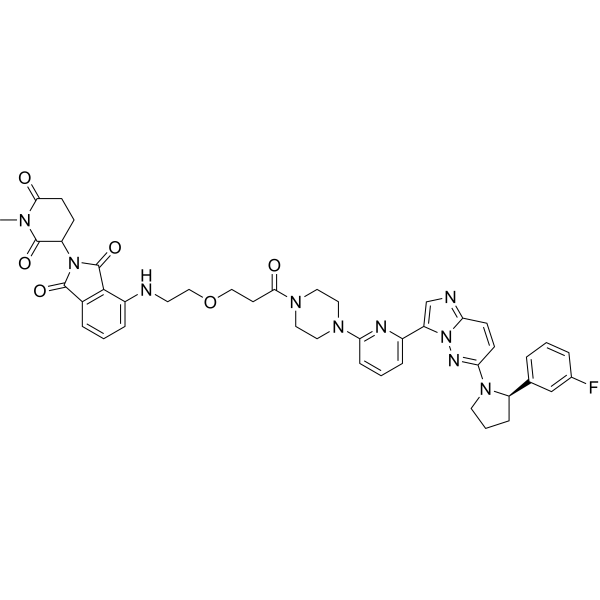 0 ImagesCat. No.: HY-157542CAS No.: 2714560-39-9CG428-NEG is the negative control of PROTAC CG428 (HY-137465). CG428-NEG binds to TRKA, TRKB and TRKC with high affinity, with Kd values of 0.88 nM, 4.8 nM and 59.8 nM, respectively. CG428-NEG inhibits the growth of cancer cells and reduces the level of TPM3-TRKA fusion protein in cancer cells. CG428-NEG can be used in the research of colorectal cancer.
-
Amitriptyline-d3 hydrochloride
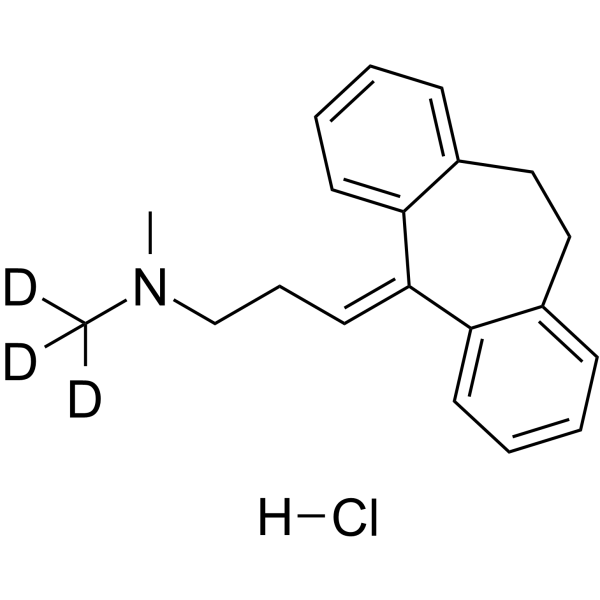 0 ImagesAmitriptyline-d3 hydrochloride is the deuterium labeled Amitriptyline (hydrochloride). Amitriptyline hydrochloride is an inhibitor of serotonin reuptake transporter (SERT) and noradrenaline reuptake transporter (NET), with Kis of 3.45 nM and 13.3 nM for human SERT and NET, respectively. Amitriptyline hydrochloride also weakly binds to dopamine reuptake transporter (DAT) with a Ki of 2.58 μM. Amitriptyline hydrochloride also inhibits adrenergic, muscarinic, histamine and 5-HT receptors. Amitriptyline hydrochloride is a TrkA and TrkB receptors agonist with potent neurotrophic activity. Amitriptyline hydrochloride has antidepressant activity.
-
Amdiglurax phosphate
 0 ImagesSynonyms: NSI-189 phosphateAmdiglurax (NSI-189) phosphate is an orally active chemical entity with enhanced neurogenic activity. Amdiglurax phosphate up-regulates neurogenic factors such as BDNF (brain derived-neurotrophic factor) and SCF. Amdiglurax phosphate exhibits anti-depressant effect. Amdiglurax enhances synaptic plasticity and reduces cognitive dysfunction. Amdiglurax phosphate holds potential for psychiatric disorder research.
-
c-Fms-IN-3
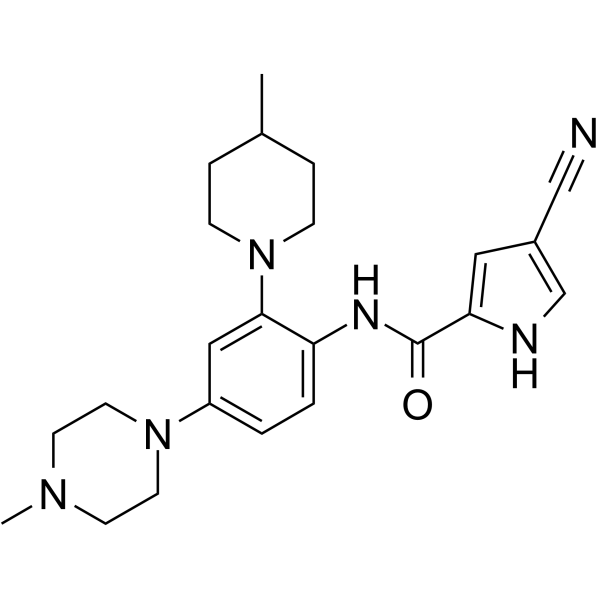 0 Imagesc-Fms-IN-3 is an orally active c-Fms (CSF1R) kinase inhibitor (IC50 = 0. 8 nM). c-Fms-IN-3 inhibits CSF1R kinase activity and reduces macrophage populations. c-Fms-IN-3 reduces bone erosion, pannus invasion, cartilage damage, and inflammation in collagen (HY-NP003)-induced arthritis mouse model. c-Fms-IN-3 is useful for arthritis research.
-
MNAC13
 0 ImagesCat. No.: HY-P991622
-
AZD 2066
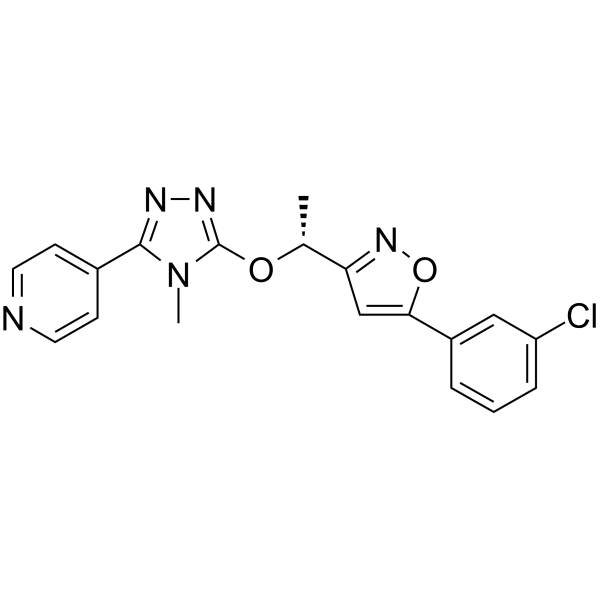 0 ImagesAZD-2066 is a selective, orally active and blood-brain barrier-permeating mGluR5 antagonist. AZD 2066 activates the BDNF/trkB signaling pathway. AZD 2066 can be used in the research of neuropathic pain, major depressive disorder and gastroesophageal reflux disease.
-
Povovetug
 0 ImagesCat. No.: HY-P991711CAS No.: 2975573-74-9Povovetug is a humanized IgG1κ chimeric monoclonal antibody inhibitor targeting NGF/bNGF. Povovetug has a significant analgesic activity. Povovetug can be used for central neuroinflammation like chronic radicular pain research.
-
FLY26
 0 ImagesCat. No.: HY-172876Purity: 99.66%FLY26 is a selective partial GluN2B antagonist with an IC50 value of 0.64 μM. FLY26 partially inhibits the GluN2B subunit of NMDA receptors, reduces calcium ion influx and reactive oxygen species (ROS) production and activates the BDNF/TrkB/CREB neuroprotective signaling pathway to alleviate neuronal excitotoxicity and mitochondrial dysfunction. FLY26 is promising for research of neurological deficits caused by cerebral ischemia-reperfusion injury.




